


Conservation@Home Spotlight – Lisa Maier
Small but Mighty in Marengo: Backyard Habitat Supports Endangered Bee

In the movement to support our native pollinators and birds, will a ¼-acre yard really make a difference? Lisa Maier’s yard in Marengo is confirming that yes, it absolutely will!
Growing up in Chicago, Lisa’s connection to the natural world started years ago when caring for a sick family member. They spent a lot of time watching birds at a nearby bird feeder, and Lisa was hooked. Binoculars, field guides, and attending seminars sent her headfirst into the “bird world.”
From first experiencing her original house finch “spark bird” at that backyard birdfeeder, she now has 722 bird species on her life list from around the world. For someone who is truly passionate about birds, an obvious next step is to start learning about the habitat that supports them. Cue the native plants and insects!
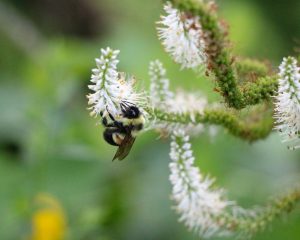
Through Doug Tallamy’s writings and her involvement in various birding groups, Lisa became a backyard native plant enthusiast to provide everything a bird needs, from insects and seeds to shelter and water. Also an avid photographer, Lisa takes pictures every day in her ¼-acre yard in Marengo where she has lived for two years. Imagine her surprise at the end of July when she photographed a federally endangered rusty-patched bumblebee on two native wildflowers in her yard, Culver’s Root and Sweet Joe-Pye Weed. If you plant it, they will come!
Lisa has surrounded her home with 70-plus species of native plants, trees and shrubs, so it’s no surprise that she’s supporting such rare insects as a federally endangered bumblebee. Not only are these plants benefitting the insects and 84 species of birds she’s documented in her yard, but they also act as a sponge to absorb stormwater before moving into a nearby drainage easement.
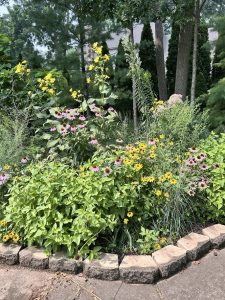
At her Conservation@Home site consultation, she received instructions on how to remove a section of lawn to convert it to a partially sunny savanna from seed. She likes the personalized information she received at her consultation, and is planning to use the yard sign to encourage others to plant natives.
When asked what she would recommend to those just getting started in their native plant journey, she suggests starting simple and planting a native tree or shrub: “They provide so many benefits such as being the host plants for most moths and butterflies, add structure in the landscape, provide food, shelter and nesting habitat for birds and other animals, provide shade and wind protection, add winter interest … the list goes on!”
Learn more about ways in which TLC’s Conservation@Home program can support you in your native plant journey. To learn more about birds and bees, you can read two of Lisa’s favorites: The Sibley Field Guide to Birds of Eastern North America, by David Allen Sibley and Bees, by Heather Holm.
Learn more about Conservation@Home here!