


The Nomads of Winter
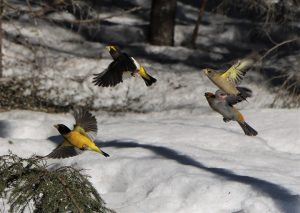
Winter can be a drab time for many people, but winter has its surprises if you know where to look. For birders, winter means the possibility of northern irruption species making their way south. An irruption is when a species moves out of its normal range in big numbers, usually due to a population boom that forces the young to search far and wide for food. Snowy Owls are one such species, as are Red-breasted Nuthatches, which are already showing up in big numbers this fall.
The finches that reside in the boreal forest are another group of winter irruption species that we look forward to seeing. These nomadic finches move south from their typical northern range in search of food. While the location of where their food sources have failed in the north can help determine where they will end up in the south, determining when they move can be tricky. In general, their movements are multifaceted and can be unpredictable, making it a rare treat when you do find them.
The winter of 2020-21 produced spectacular showings of Pine Siskin, Evening Grosbeak and Red Crossbill in McHenry County and the surrounding area. A few White-winged Crossbills also showed up in the area. Red-breasted Nuthatch was also a common sight. 2021-22 had incredible numbers of Redpolls and White-winged Crossbills. Northern owls also had a good year with Northern Saw-whets being found in several locations.
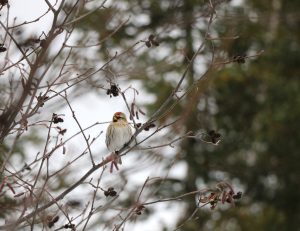
The 2025-26 winter season is predicted to be a good year due to a combination of cone crop failures in the north paired with a good breeding season due to abundant budworm outbreaks. Aside from Purple Finches, which have already been turning up in big numbers, we could see Redpolls, Pine Siskins, Red Crossbills and even Evening Grosbeaks.
These birds are always on the go and typically do not linger in any one place for long. Familiarizing yourself with their preferred food sources will greatly improve your chances of finding one this winter. They can be found anywhere they find food, from natural areas to business parks and neighborhoods to backyard feeders.
Finch preferred food sources:
Evening Grosbeak– Maple, ash, box elder seeds and buds. Fruiting trees /shrubs. Large platform feeders with black oil sunflower.
Red Crossbill– Eastern white, red and jack pine. Any spruce species. Eastern hemlock and Eastern white cedar (arbor vitae). Black oil sunflower feeders.
White-winged Crossbill– Tamaracks (native and European), white, red, black and blue spruce. Black oil sunflower feeders.
Pine Siskin– Alder, Eastern white cedar (arbor vitae), spruce, ash, and in weedy fields. Thistle feeders.
Redpoll– Birch, alder and weedy fields. Thistle and black oil sunflower feeders.
Bohemian Waxwing and Pine Grosbeak are much rarer irruption species that will occasionally come south later in winter (January / February) once fruit crops have been depleted in the north. Keep an eye out for Bohemians mixed in with flocks of Cedar Waxwings and Pine Grosbeaks on crabapples, mountain ash, buckthorn and other trees / shrubs that hold fruit through the winter.
Tracking these ever-on-the-move birds is a challenge that relies heavily on the observations of individuals like you and me. If you do get lucky and spot one of these birds, please report your sightings on eBird.org to help further our knowledge and understanding of these special visitors from the north.