CLIP Week 2: Plant ID and Getting into the Weeds
 On Monday, we had our first lesson in herbicide spraying at Thompson Road Preserve. After working with TLC volunteers at a workday, we practiced identifying Amur Honeysuckle before we got to work spraying it. I (Denver) particularly enjoyed this activity due to my intense disdain for Amur Honeysuckle and its monoculture presence across much of our local natural areas.
Tuesday morning was an early one – we arrived at the site at 7 am to get an early start to bird watching. The site was located in Hebron, IL, what was once an old railroad track turned into a path for people to walk or bike through.
Anthony and Denver have previous knowledge of birds, while I (Jazzy) had to try my best to identify the types of bird species by color. The beginning of this track started more wooded then led into a more open field area, which Daniel (TLC’s Restoration Ecologist) then taught us was a sight into a historical remnant prairie.
Around 9:00 a.m. we moved onto the Jankowski property, where we identified common teasel. It was tedious to find at first, but the further we traveled into the easement, the bigger patches of these enlarged-looking lettuce plants we found. This was our second time spraying invasives, getting ourselves used to identifying and being comfortable with spraying.
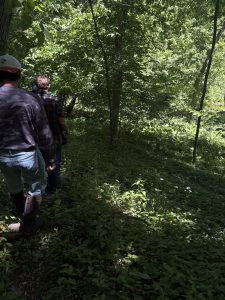 Wednesday was our first time monitoring easements with Kathryn (TLC’s Land Preservation Specialist). This was also our first time really diving into what oak trees look like and the differences between white and red oaks. We started the day at a private conservation easement, ensuring the good quality of the area and searching thoroughly for any possible violations or hazards. After that we moved on to the adjacent Spring Hollow easement, conducting the same search and pointing out invasive versus native plants, signs in need of replacement, and overall cool plants.
This area was where we really emphasized the difference between the oak trees; which, for those who don’t know, one of the big tells between a red oak and an white oak is whether the leaves are pointed (red oak) or more rounded (white oak.)
Thursday morning I (Denver) arrived a bit later than usual due to a Zoom call scheduled with my college’s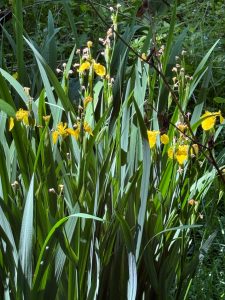 administration for a club that I am in. I met the others at Irish Oaks where we visited the orchids we searched for last Wednesday. We mapped the orchids’ location in ArcGIS and began spraying Wild Parsnip and Garden Valerian with herbicide.
After lunch, I was lucky enough to get the opportunity to learn how to use a brush saw, and we walked down to the remnant prairie in Irish to brush saw, girdle a couple trees, and clear tall plants. Anthony, Jazzy and I rode back to Hennen in my car (where I figured out my air conditioning was broken …) and got to chat a bit more during the drive.
Friday was a much shorter, calmer day spent inside learning more technical aspects of what we do here at TLC. This included diving deeper into ArcGIS and how the data and interface translates to FieldMaps, an app we use to keep track of our monitoring. After learning more about the internal interfaces we use, we shifted to watching one of TLC’s own videos about tree identification. We learned about all the native trees we might find and some general tips on how to identify them based on things like leaf shapes, bark type and even scents!
Our major themes this week were emphasizing plant identification and getting into the weeds of invasive removal. Learning different methods of identification and removal will aid us throughout our entire CLIP journey, and act as a basis for the rest of this summer!
Words of Wisdom From Spock: /””””
Tick Count for the Week: 5
Cumulative Tick Count: 9
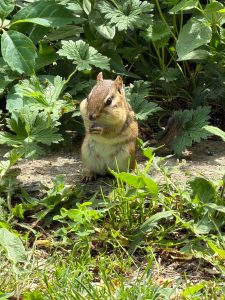
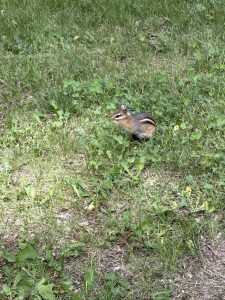
Some cute chipmunks we’ve encountered: